Episode 3 – From fruit to oil: what really happens in Moroccan mills
We often talk about terroir, varieties, regions.
But between the picked olive and the oil we pour on bread, something decisive happens.
And it’s there, in the mills, that many oils gain — or lose — their quality.
Because no, not all Moroccan olive oils are the same. The difference doesn’t only come from the tree, but from time, gestures and choices made after harvest.
Harvest: the beginning of a countdown
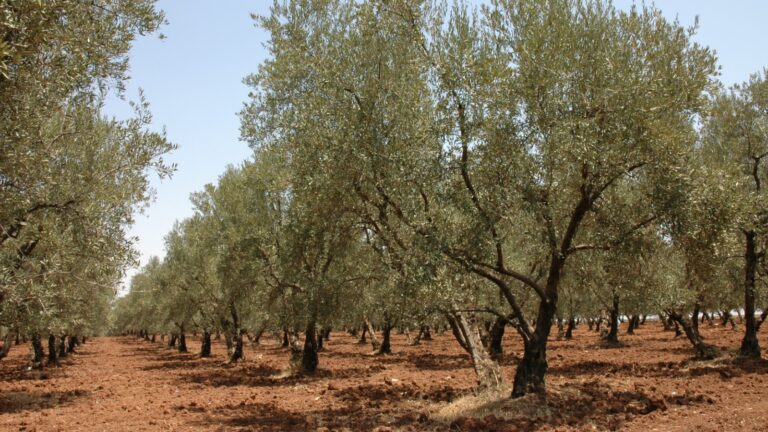
In Morocco, harvest generally begins in late October and can extend until January, sometimes February depending on regions and climate conditions.
Ideally, olives should be:
- picked at controlled maturity,
- transported quickly,
- pressed within 24 to 48 hours.
In field reality, especially in rural areas:
- olives are often collected by hand or with sticks,
- placed in jute or plastic bags,
- then piled outside, sometimes for several days, under the sun.
At this stage, the problem isn’t tradition. The problem is time.
Olives are living fruits. When they’re crushed by their own weight, deprived of air and exposed to heat, they begin to ferment.
This fermentation increases acidity, alters aromas and reduces the freshness of the final oil.
Traditional mills: heritage and limits
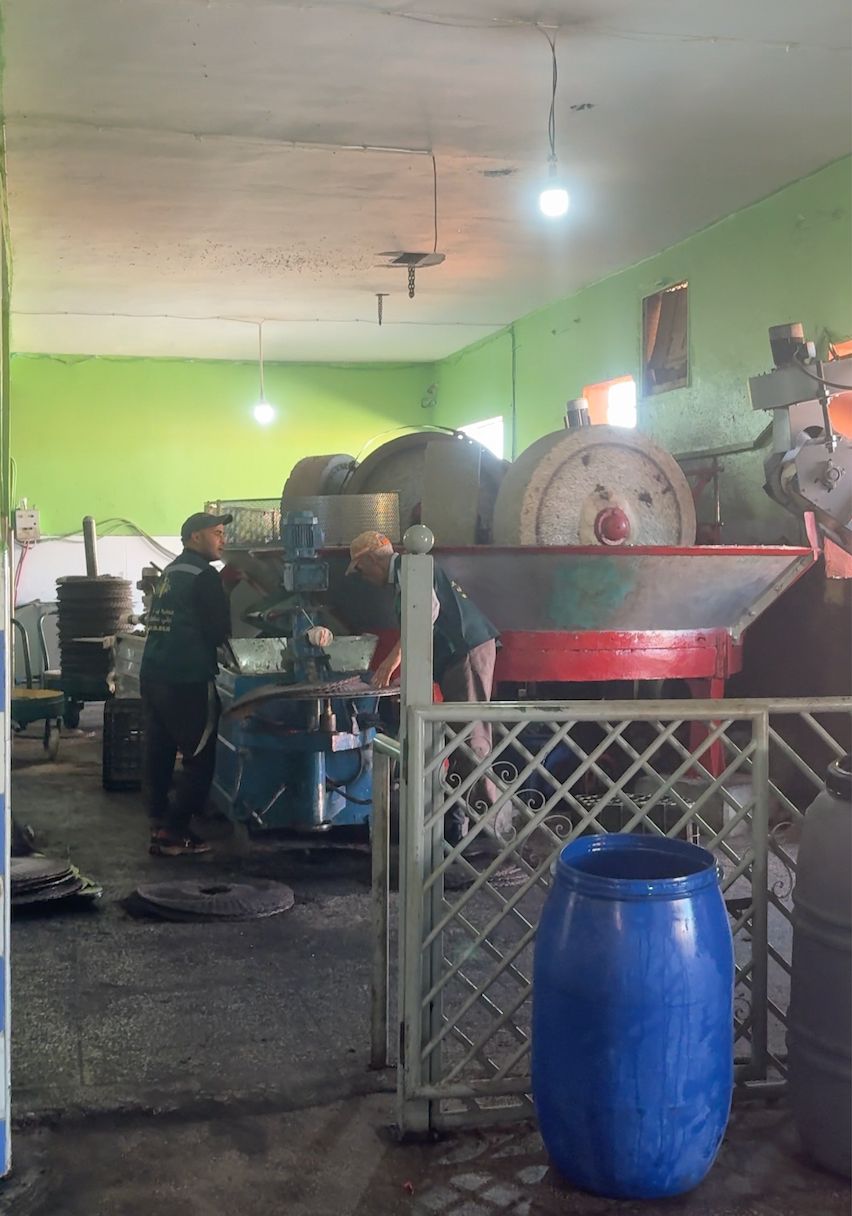
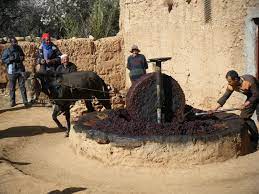
Traditional maâsras have been part of the Moroccan landscape for centuries.
You find there:
- stone wheels,
- mechanical or manual presses,
- strong human intervention.
What these mills bring
- Know-how passed down through generations
- Essential local activity for small producers
- Strong cultural identity
What they pose as problems
- Limited capacity → waiting lines during high season
- Slow pressing → olives stored too long
- Difficulty controlling:
- hygiene,
- temperature,
- oxidation
In many traditional mills, olive paste can remain exposed to air, and oil isn’t always filtered immediately.
Result: sometimes cloudy oil, with powerful taste, but unstable over time.
It’s neither “bad” nor “authentic by nature.” It’s simply fragile oil, to be consumed quickly.
Modern units: speed, control, compromise
For about fifteen years, Morocco has seen more and more modern units appear, particularly in the Meknes, Fes and Marrakech regions.
These units operate in continuous chain:
- rapid crushing,
- controlled malaxing,
- centrifugal extraction,
- separation of oil and water,
- immediate filtration (often).
The advantages
- Pressing within hours of harvest
- Better temperature control
- Reduced oxidation
- More consistent quality
- More stable oils, suitable for export
The limits
- Expensive investment
- Less accessible to very small producers
- Possible standardization of aromatic profiles
We’re not talking here about “modern = better,” but about control. Technology doesn’t replace fruit quality, it simply avoids degrading it.
Field reality: between ideal and constraints
High season is short. Everyone wants to press at the same time.
Result:
- waiting lines,
- imposed compromises,
- producers forced to accept delays,
- sometimes mixing of batches of different quality.
Many so-called “artisanal” oils suffer not from lack of know-how, but from lack of logistical capacity.
This is a reality rarely told, but essential to understand why two oils from the same village can be radically different.
How to recognize well-made oil?
Without being an expert, certain signs speak:
- Harvest and pressing date clearly indicated
- Acidity below 0.8%
- Fresh, vegetal smell, without fermentation notes
- Bitterness and peppery kick present but balanced
A “mild” oil isn’t necessarily a good oil. An overly aggressive oil isn’t either.
And for the curious traveler?
More and more estates around:
- Meknes
- Fes
- Marrakech
open their mills to visitors, offer tastings, explain their methods.
It’s often there, on site, that we truly understand what’s in the bottle.
Between tradition and modernity
Between tradition and modernity, there’s no side to choose. There are choices to understand.
And understanding how an oil is made is already tasting it better.
🔗 Related reading
- Series: Moroccan olive oil, drop by drop
- Episode 1: Moroccan olive oil: a heritage of terroirs, seasons and craftsmanship
- Episode 2: Olive tree varieties in Morocco: understanding the tree to understand the oil
- https://blog.jbujb.ma/episode-5-moroccan-olive-oil-from-traditional-food-to-natural-skincare-wellness/
👉 Subscribe to the JBUJB newsletter to follow the series and discover Morocco’s best local experiences.
— The JBUJB Team
Épisode 3 — Du fruit à l’huile : ce qui se passe vraiment dans les moulins marocains
This is Episode 3 of our Moroccan Olive Oil series. ← Episode 2 | Continue to Episode 4: Reading the Label →