Moroccan olive oil: a story we’ll tell, drop by drop
You know what I love about Morocco? You can spend an entire hour passionately debating olive oil. An entire hour! Over mint tea, everyone defends their region like their life depends on it.
“Our olive oil? Wallah, there’s nothing better!” your friend from Meknes will tell you.
“Wait, wait… you’ve never tasted ours,” the one from Taounate will respond with a knowing smile.
And you know what? They’re all right. Every single one of them.
More than oil, it’s a family story
Olive oil in Morocco is so much more than an ingredient in your cupboard. It’s that bottle grandma keeps safe, the one from her home village. It’s that taste that instantly takes you back to childhood, when you’d dip your bread in a small pottery dish.
It’s also those endless friendly debates where everyone swears theirs is unbeatable. And honestly, would we really want that to stop?
Let’s take our time (like a good tasting)
I could have told you the whole story in one article. Bombarded you with information. Checked all the boxes.
But that would completely miss the point.
Olive oil isn’t meant to be rushed. You savor it. You discover it bit by bit. You learn to recognize its nuances, its character, its secrets.
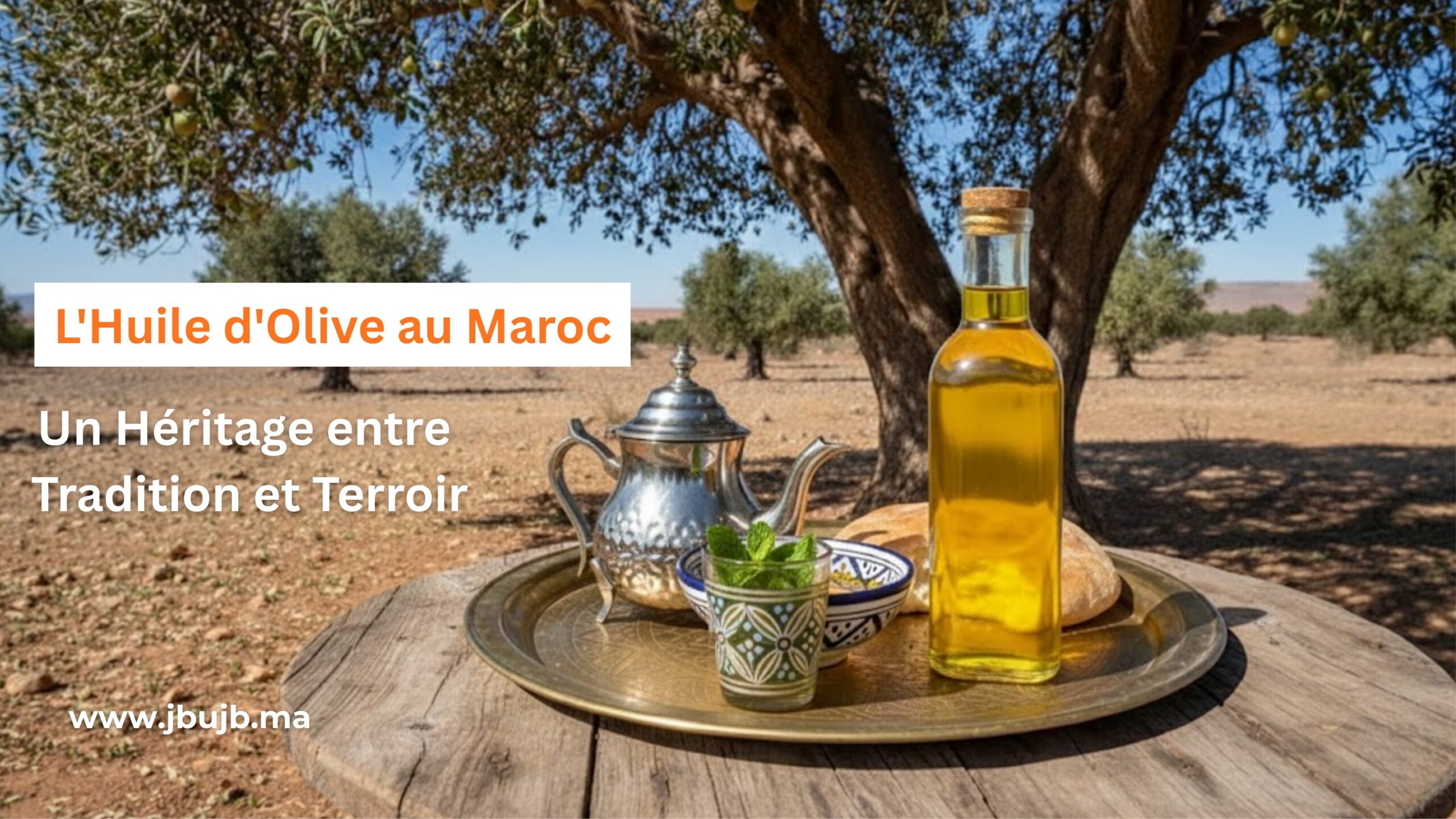
So here’s what I decided: I’m creating a real series. Imagine us meeting regularly, you and me, like old friends gathered around a piece of warm bread and a drizzle of golden oil that smells like Moroccan terroir.
What’s waiting for you (and why you’ll love it)
Here’s the journey I’m offering you:
The magical terroirs — We’ll hit the road, from Meknes to Taounate, from Chefchaouen to the olive groves near Marrakech. Each region has its own temperament, its century-old olive trees, its well-kept secrets.
The varieties that make all the difference — Moroccan Picholine, Haouzia, Menara… Do these names ring a bell? They’re about to become your friends.
From ancestral mills to modern presses — How did people go from olive to oil a hundred years ago? And today? Spoiler: some producers do both, and it’s brilliant.
The benefits everyone talks about — Yes, it’s good for your health. But wait until you discover HOW and WHY. You’ll be amazed.
Olive oil at the hammam?! — Oh yes. And that’s not all. Cosmetics, wellness, beauty rituals… Moroccan olive oil has more than one trick up its sleeve.
Why I’m telling you all this on JBUJB?
Because at JBUJB, we don’t do things halfway. Our mission is to connect you to real experiences, real people, real flavors of Morocco.
Behind every bottle of olive oil, there’s a family. A producer who wakes up at dawn during harvest. A women’s cooperative that transforms each olive with patience and know-how.
This series is my way of saying: “Hey, that bottle in your kitchen? It deserves real attention.”
Maybe after reading this, you’ll never see your olive oil the same way again. Maybe you’ll call your cousin in the village to order the next harvest. Maybe you’ll even start your own passionate debate at the next family dinner.
See you very soon
The first episode drops in a few days. In the meantime, I have a question for you:
Which region does your favorite olive oil come from? And more importantly… why is it obviously the best?
Tell me in the comments. I can’t wait to read your stories (and your arguments!).
Subscribe to the JBUJB newsletter to follow the series and discover Morocco’s best local experiences.
JBUJB Team — Because the best discoveries are savored together
Explore the full Moroccan Olive Oil series: