Best Practices for Restaurant Menu Design: Lessons from Top Moroccan Restaurants
Why Menu Design Is One of Your Most Powerful Sales Tools
Your restaurant menu is not just a list of dishes and prices. It is a sales tool, a brand statement, and a communication device all in one. The best restaurants in Morocco, from upscale establishments in Marrakech’s Hivernage district to popular cafes in Casablanca’s Anfa neighbourhood, all treat menu design as a strategic priority. Here are the principles they use and how you can apply them to your own restaurant.
Principle 1: Less Is More
Research in menu psychology consistently shows that menus with fewer items outperform menus with too many choices. When customers face too many options, they experience decision fatigue and often default to familiar, lower-priced items. The ideal number of items per category is 7 plus or minus 2. This means 5 to 9 items per section, not 20.
The most successful restaurants in Morocco have reduced their menu size over time and seen average order values increase as a result. Less clutter means customers spend more time considering each item rather than scanning endlessly.
Principle 2: Strategic Placement of High-Margin Items
Menu engineers call this the golden triangle: the areas of a menu that customers look at first. On a two-page physical menu, this is the top right corner and the center. On a digital menu, it is the first item in each category and any item with a featured badge.
Place your highest-margin items in these prime positions, not necessarily your most expensive items. A dish that costs 30 MAD to prepare and sells for 80 MAD is more valuable to your business than a dish that costs 60 MAD to prepare and sells for 120 MAD.
Principle 3: Use Descriptions That Sell
The language you use to describe a dish has a measurable impact on how much it sells. Compare these two descriptions: Chicken Tagine, and Slow-cooked chicken tagine with preserved lemons, Moroccan olives, and aromatic ras el hanout spices, prepared using a traditional recipe from the High Atlas Mountains. The second version tells a story and creates an emotional connection. Studies show that descriptive menu language increases sales of specific items by 27%.
Principle 4: Photography Changes Everything
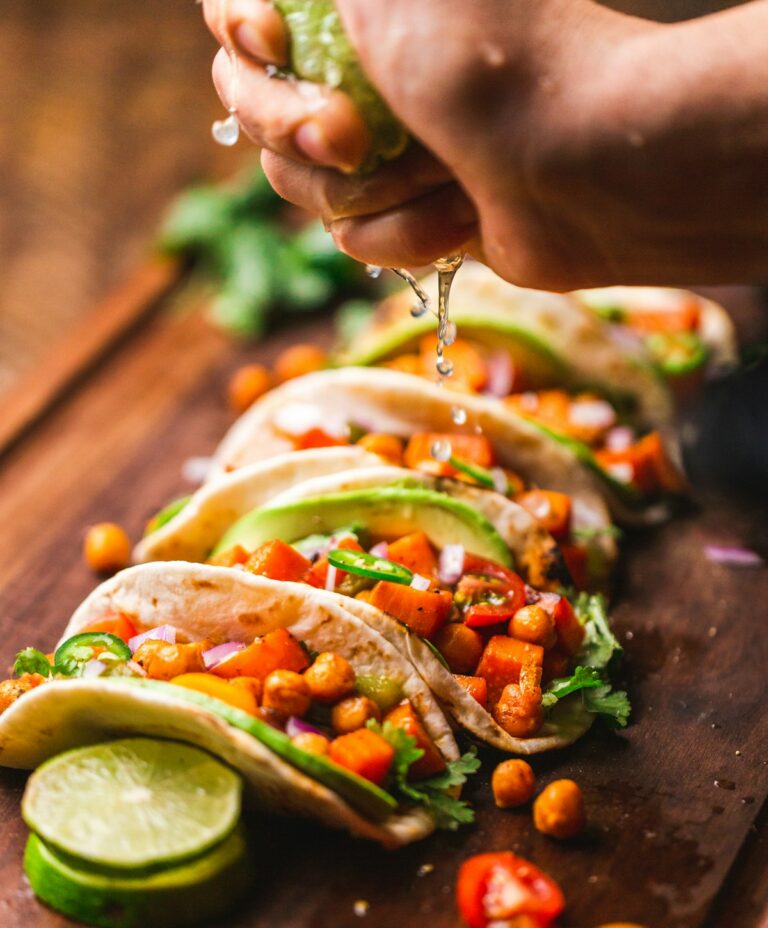
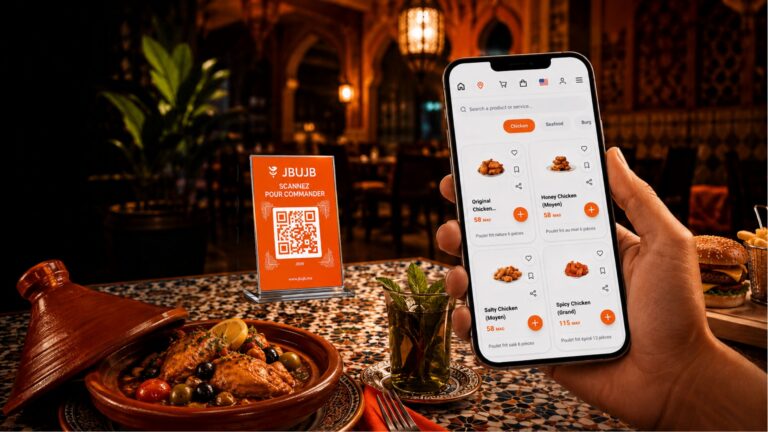
High-quality food photography is no longer optional for competitive restaurants. With digital menus from JBUJB, you can add a photo to every menu item. Make sure your photos are taken in good natural light, show the dish at its most appetizing angle, and accurately represent the portion size customers will receive. Poor photos are worse than no photos, so invest in at least one professional food photography session.
Principle 5: Multilingual Menus Are Essential in Tourist Cities
If your restaurant is in Marrakech, Agadir, Fes, Rabat, or any city that receives significant tourist traffic, offering your menu in at least three languages is no longer optional. With JBUJB, creating a multilingual digital menu is built into the platform, allowing you to serve every customer in their preferred language without any additional cost.
Principle 6: Keep Prices Clean and Transparent
Avoid currency symbols and decimal points where possible. Research shows that removing the MAD symbol from prices reduces price sensitivity. Instead of 85.00 MAD, simply write 85. This subtle change makes prices feel less clinical and encourages customers to focus on the food rather than the cost.
Applying These Principles to Your Digital Menu
All of these principles apply whether you have a physical menu or a digital menu, but digital menus from JBUJB make them much easier to implement and test. You can change your menu layout, update descriptions, add photos, and reorder items instantly without any reprinting costs. This lets you experiment and optimize your menu based on actual sales data.
Ready to switch to a digital menu? Create your free JBUJB menu in under an hour, or read our step-by-step setup guide.