Digital Menu vs Paper Menu: A Cost Analysis for Moroccan Restaurants
The Real Cost of Paper Menus in Morocco
Most restaurant owners in Morocco underestimate how much they spend on paper menus every year. Between design fees, printing costs, lamination, and frequent reprints due to price changes or new dishes, the annual cost adds up quickly. This article breaks down the real numbers and compares them to the cost of a digital menu platform like JBUJB.
Paper Menu Costs: A Realistic Breakdown
For a restaurant with 20 tables in Morocco, a typical paper menu setup looks like this. Initial graphic design from a local designer costs between 500 and 1500 MAD. Printing 50 menus (allowing for extras and replacements) at a print shop costs between 300 and 800 MAD depending on quality. Lamination adds another 200 to 400 MAD. Every time prices change or a new dish is added, you need to reprint and relaminate. Most Moroccan restaurants do this 3 to 4 times per year.
Annual paper menu cost estimate: 3000 to 6000 MAD per year, excluding the time spent coordinating with designers and print shops.
Hidden Costs of Paper Menus
Beyond the direct printing costs, paper menus have hidden costs that many restaurant owners do not consider. Damaged or dirty menus need immediate replacement, adding unexpected expenses. Menus left behind by customers or accidentally taken are a constant source of loss. During busy seasons like Ramadan and summer tourist season, you may need to rush-print additional copies at premium prices.
Digital Menu Costs with JBUJB
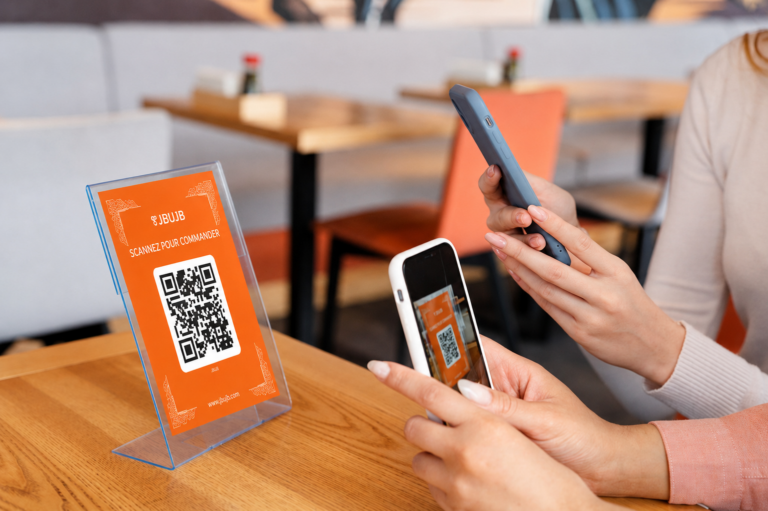
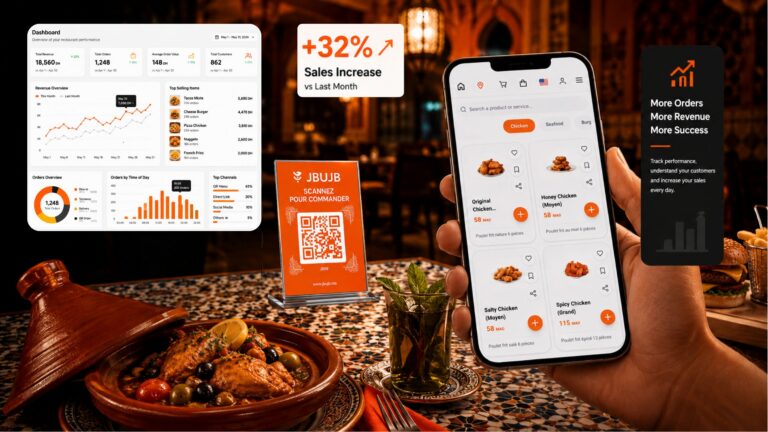
A digital menu subscription with JBUJB costs a fraction of what restaurants spend on paper menus annually. The platform includes unlimited menu updates, multilingual support in Arabic, French, and English, QR code generation, analytics on which dishes customers view most, and dedicated customer support in Moroccan Arabic and French.
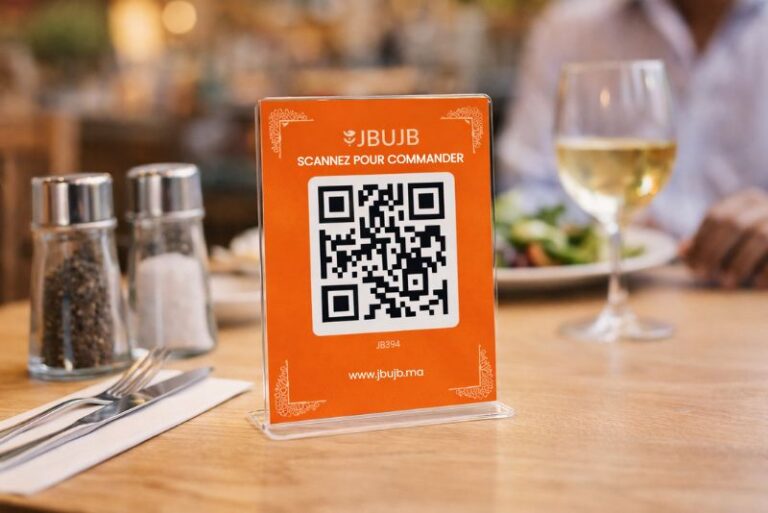
Beyond the subscription cost, you need to invest once in printed QR code table cards, which cost approximately 200 to 400 MAD total and never need to be replaced unless you change your restaurant branding.
The Break-Even Point
For most Moroccan restaurants, the switch to a digital menu pays for itself within the first 3 to 4 months. After that, every dirham saved on printing goes directly to the bottom line. Over a 3-year period, the savings are substantial, often amounting to 10,000 to 20,000 MAD or more depending on restaurant size.
Non-Financial Benefits That Also Have Value
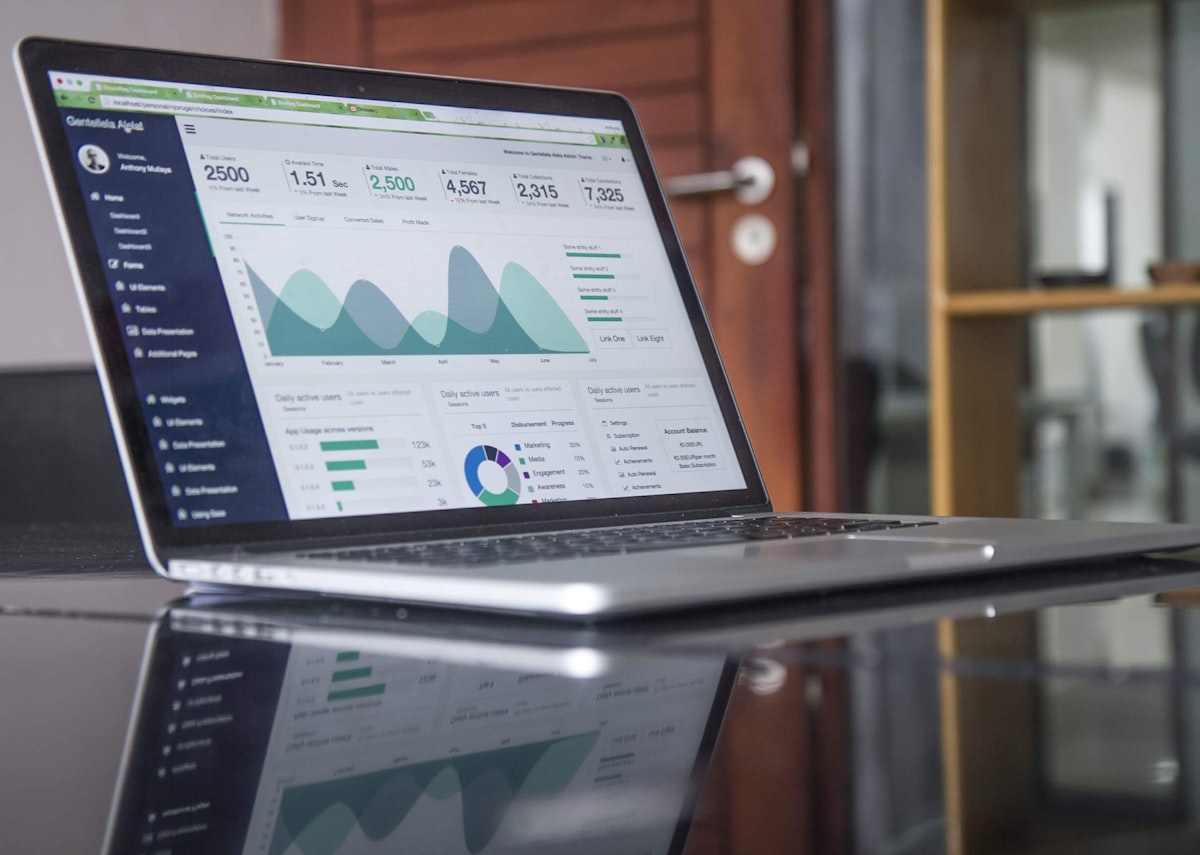
The financial analysis alone makes digital menus the clear winner, but there are additional benefits that are harder to quantify financially. Real-time updates mean customers always see accurate information including current prices and available dishes. Multilingual menus increase sales from international tourists who might otherwise struggle with Arabic or French menus. Analytics help restaurant owners understand which dishes are most popular and can inform purchasing and pricing decisions.
What Restaurant Owners in Morocco Are Saying
Restaurant owners who have switched to JBUJB digital menus consistently report that the transition was smoother than expected and that customers, especially tourists, respond very positively to the digital experience. The ability to update the menu instantly is often cited as the single biggest operational improvement.
Conclusion: The Numbers Speak for Themselves
When you compare the total cost of ownership over 12 months, digital menus are significantly cheaper than paper menus for Moroccan restaurants of all sizes. Add in the operational benefits, improved customer experience, and multilingual capabilities, and the case for switching becomes overwhelming. The question is not whether to switch to a digital menu, but when.
Ready to switch to a digital menu? Create your free JBUJB menu in under an hour, or read our step-by-step setup guide.